REVIEW · BARCELONA
Barcelona: 2,5h Gaudí Segway Tour
Book on GetYourGuide →Operated by Sun & Segway Barcelona · Bookable on GetYourGuide
Ready for Gaudí at street speed? This 2.5-hour Segway tour is an efficient way to see Barcelona’s Modernisme in real neighborhoods, not just from a bus window. I like the mix of Casa Batlló fantasy and the city-scale drama of Sagrada Família, especially because the guide explains what you’re looking at as you glide. One drawback to plan for: attraction entry tickets aren’t included, and the Segway itself has real physical limits.
The practical part matters here. You get a training session and a safety briefing before you start, and guides like Freddy and Danny are known for keeping first-timers calm and on track. Still, it’s not for everyone: if you’re under 14, pregnant, or have back problems, you’ll need another plan.
In This Review
- Quick Hits Before You Ride
- Key Points Worth Paying Attention To
- Why This Gaudí Segway Tour Beats a Classic Walking Day
- Getting Started at Passatge de la Canadenca (Jardins de les Tres Xemeneies)
- The First Zone: Mirador Colom, El Cap de Barcelona, and Ciutadella Views
- Arc de Triomf and the 1888 Footprint
- Passeig de Gràcia: Where Gaudí’s Style Meets High-End Streets
- Casa Batlló: Fantasy Details You Can Actually See
- Casa Milà (La Pedrera): 1906, Stone, and a Rustic Edge
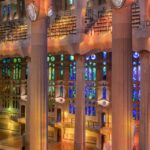
- Sagrada Família: The Most Famous Pause on the Route
- La Monumental, the Born Area, and Local Barcelona Layers
- Parc del Mirador del Poble-sec: A View That Helps You Catch Your Breath
- What’s Included in the $45 Price (and What Isn’t)
- Group Size, Pace, and Why It Affects Your Enjoyment
- Languages and Your Guide Experience
- Who Should Book This (and Who Should Skip)
- Should You Book This Barcelona 2.5h Gaudí Segway Tour?
- FAQ
- What’s the duration of the Barcelona Gaudí Segway tour?
- How much does the tour cost?
- Where do I meet the guide and where does the tour end?
- Is the Segway and helmet included in the price?
- Are entry tickets to Sagrada Família, Casa Batlló, or Casa Milà included?
- What’s the minimum age to join?
- What are the weight and height requirements?
- What languages are available for the live guide?
- How big are the groups?
- Is it suitable for pregnant people or people with back problems?
Quick Hits Before You Ride
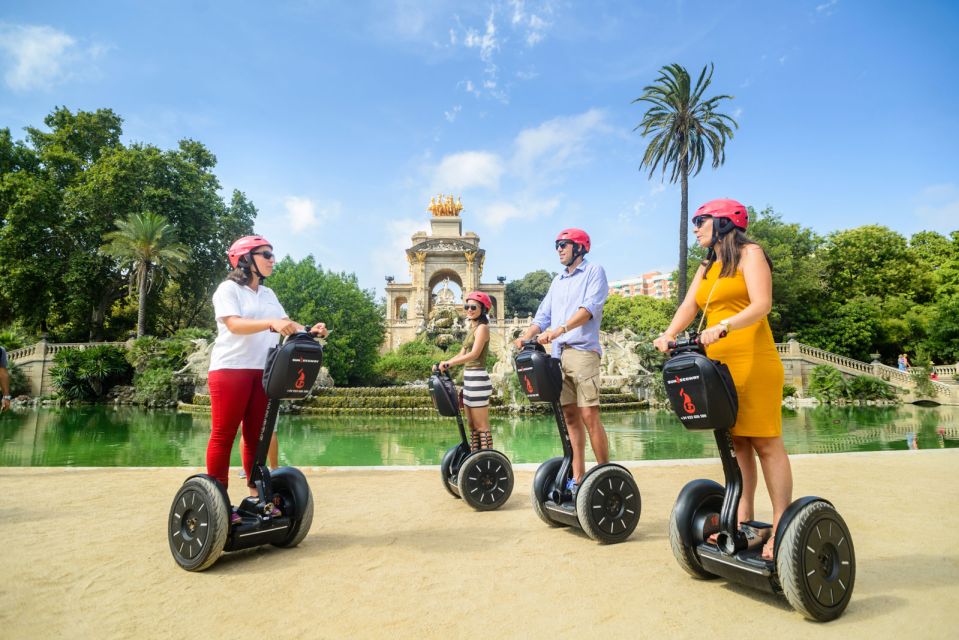
You’ll spend the morning-style “checkpoint” time on photostops and short guided moments, so it feels active, not slow. The big value is that your time is used for high-impact streets—especially around Passeig de Gràcia—while still touching older parts of the city like the Gothic Quarter and Born.
A final note on comfort: this tour is $45 per person. That’s a fair price when you factor in the Segway rental, helmet, training, and a live guide—but you should budget separately if you want to go inside any sights.
Key Points Worth Paying Attention To
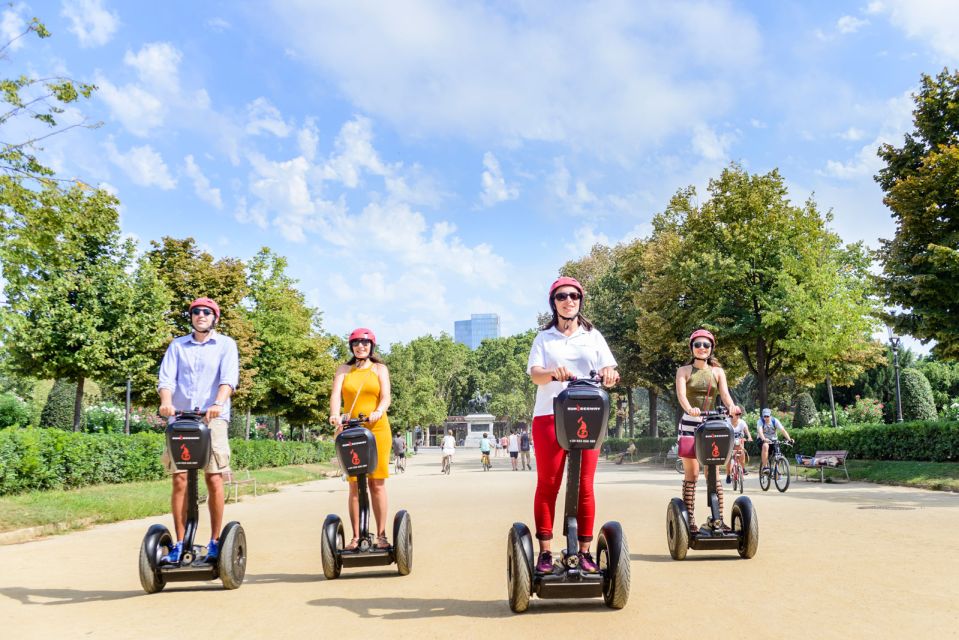
- Training that actually helps: you’ll do an instruction session and safety briefing before moving into traffic areas.
- Modernisme focus, not a scattershot tour: the story centers on Gaudí’s signature style and Catalan Modernisme.
- Photo stops paced for 2.5 hours: you’ll see a lot, but you won’t have long museum-style time at each stop.
- Neighborhood variety: Gothic Quarter/Born layers plus Eixample masterpieces, not just one district.
- You’ll need the right body fit: 14+, 150 cm minimum height, 45–130 kg range, and no back problems/pregnancy.
You can also read our reviews of more tours and experiences in Barcelona.

Why This Gaudí Segway Tour Beats a Classic Walking Day
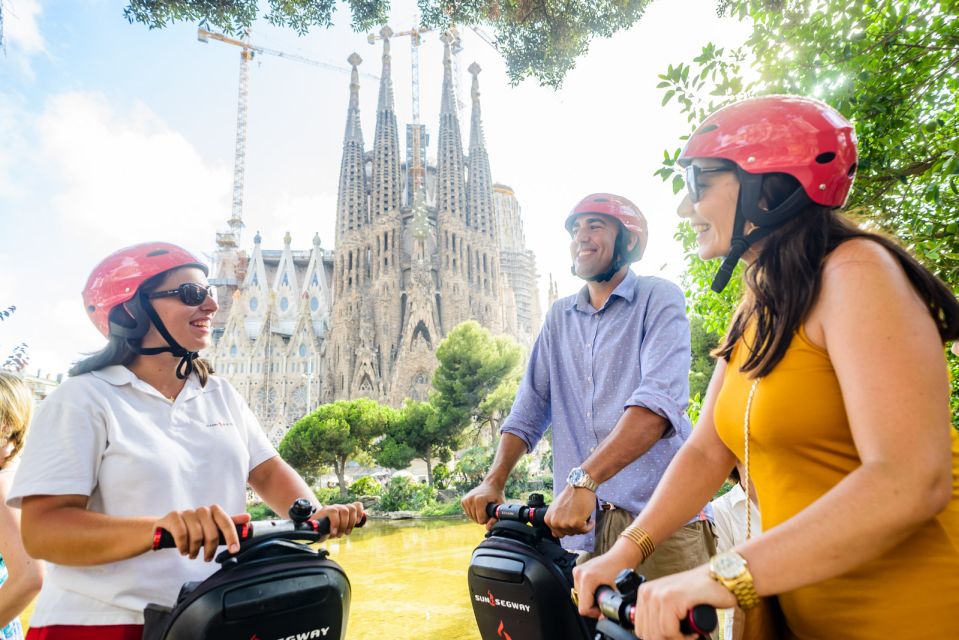
If your goal is to understand Gaudí and Modernisme without spending all day walking, this is a strong format. Barcelona is huge on the “look, look, look” factor—buildings, street details, angles—yet many classic tours slow down because they’re mostly on foot. On a Segway, you keep momentum while still stopping enough to absorb details from the guide.
I also like that the tour isn’t just about the headline buildings. You get a route that links the dots: where the city turns from older streets toward Eixample’s Modernisme grid, and how that change shaped Gaudí’s work.
You’ll also get a good mix of iconic and context-building stops. Some are big-photo moments (Sagrada Família), others are “wait, that’s Gaudí?” moments (like the Antoni Gaudí lampposts at Pla de Palau). It’s the kind of route that helps you start recognizing patterns instead of just collecting landmarks.
Getting Started at Passatge de la Canadenca (Jardins de les Tres Xemeneies)
Plan to arrive with a little buffer. Your meeting point is Passatge de la Canadenca, 6, inside Jardins de Les Tres Xemeneies. The guide and Segways are set up about 5 minutes before your booked time in the training square area near the street art and skate park space—so don’t waste time trying to find a store sign.
If you’re using public transit, the nearest option is Metro L2 or L3 to Paral-lel, then exit at Nou de La Rambla. It’s not far, but it can feel a bit maze-like if you’re late and rushing.
Before you roll, you’ll go through:
- a training session on how to operate the Segway safely
- a safety briefing (around 10 minutes)
That matters because the rest of the tour is a sequence of quick guided moments. When people feel comfortable early, they can actually enjoy the ride instead of second-guessing every turn.
The First Zone: Mirador Colom, El Cap de Barcelona, and Ciutadella Views
The tour starts you in the city center zone and then starts building visual momentum. You’ll hit the Mirador de Colom area for a photo stop and guided sightseeing, then continue to El Cap de Barcelona, again with guided explanation and time to take pictures.
After that, the tour moves into Parc de la Ciutadella, which is a smart choice for a Segway day. It’s a big open space where you can breathe, regroup, and see a different side of Barcelona than the dense street corridors.
In Ciutadella Park, you’ll also look for political and architectural anchors such as the Parliament of Catalonia and the Castell del 3 Dragons. You’ll learn how this area connects to Gaudí’s early development—specifically mentioning his early work when he was still building his footing as an architect.
Practical note: parks are where Segways feel most natural. If you get a little nervous on the first minutes, this is the area where you’ll likely start feeling confident.
Arc de Triomf and the 1888 Footprint
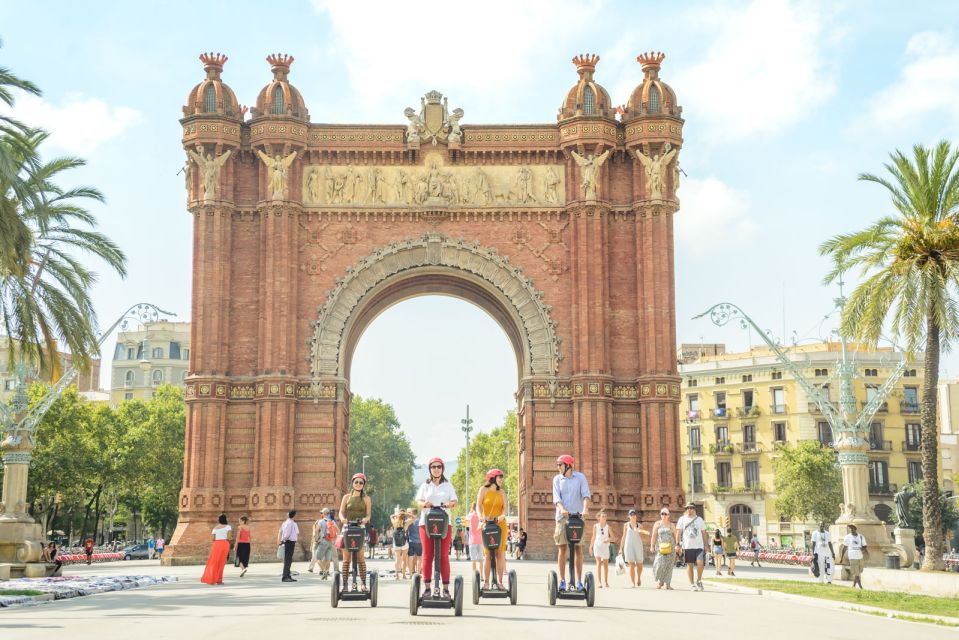
Next up is Arc de Triomf, with a guided photo stop and quick context. This arch matters because it ties Barcelona’s big public-building moments to the Universal Exhibition of 1888.
This is more than a “pretty photo” stop. Understanding why the arch exists helps you make sense of why Eixample was designed the way it was—wider streets, grand avenues, and the stage for Modernisme showpieces.
Arc de Triomf also acts like a clean transition point. You shift from older streets and park space toward the Eixample area where Gaudí’s most recognizable facades take center stage.


Passeig de Gràcia: Where Gaudí’s Style Meets High-End Streets
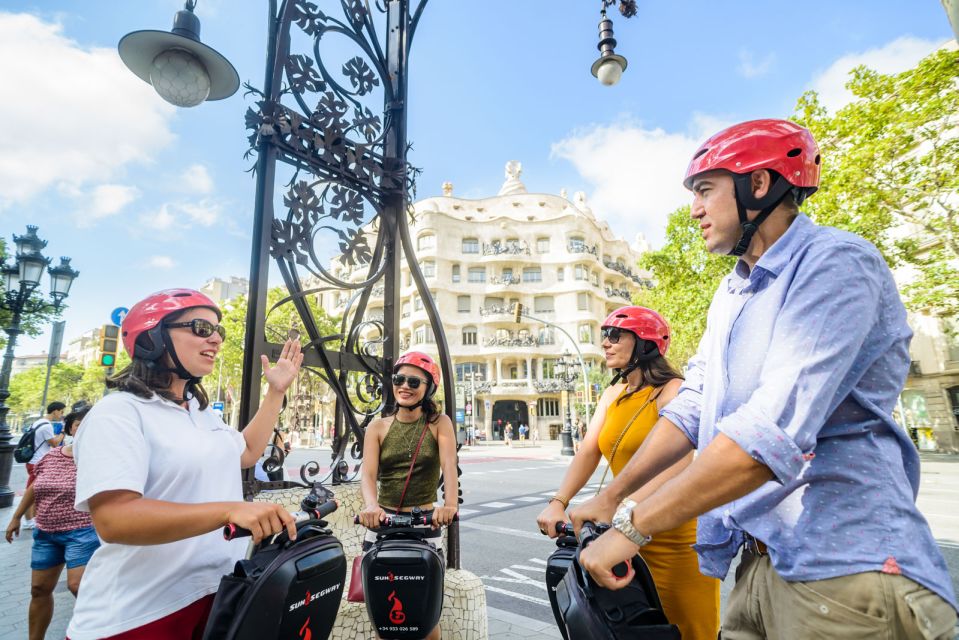
Once you roll onto Passeig de Gràcia, the tour turns into a Gaudí corridor experience. You’ll ride along the area that’s famous for luxury boutiques, but the guide keeps it focused on architecture instead of shopping.
This stretch is perfect for Segways because the boulevard is wide enough to handle movement, and you can get multiple perspective angles quickly. The point isn’t to stare at one building for an hour. It’s to start noticing how Gaudí treats:
- shapes
- surfaces
- color and texture
- symbolism, even when you only catch it from the sidewalk
You’ll have a photo stop and guided tour while you’re in the Passeig de Gràcia zone, then you’ll move directly into the big two: Casa Batlló and Casa Milà (La Pedrera).
Casa Batlló: Fantasy Details You Can Actually See
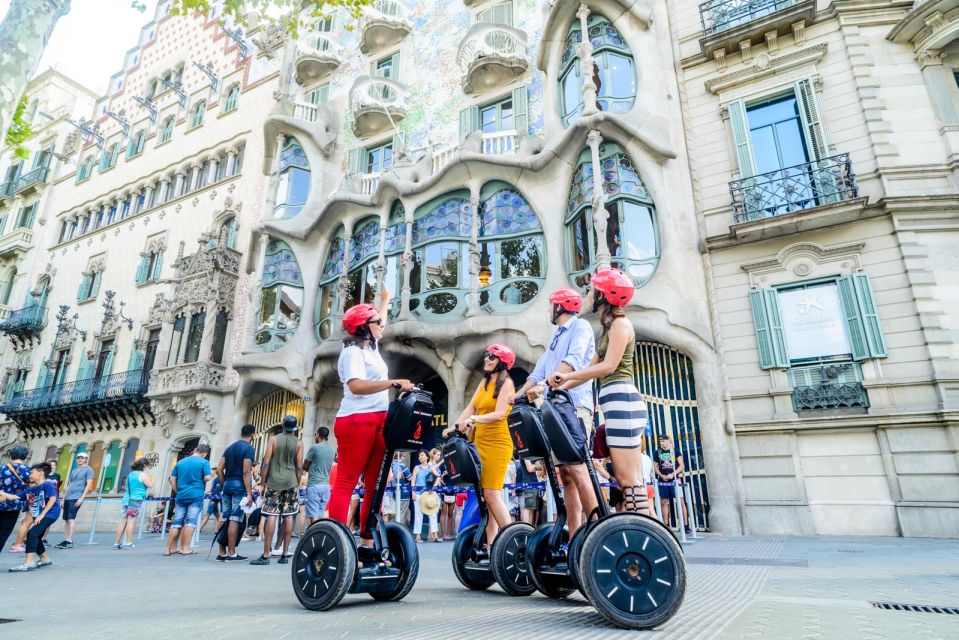
Casa Batlló is often described like a dream, but the value here is you’re not just gawking. Your guide helps you connect the visual ideas to Catalan Modernisme themes—how Gaudí used form as storytelling.
You’ll get a stop with guided sightseeing time and photo opportunities. Because it’s a short stop, don’t expect a slow, museum-level explanation. Instead, think of this as a “first look” that trains your eye. By the time you’re moving toward Casa Milà, you’ll likely catch more details than you would have on your own.
If you want to do this well without rushing, do this: pick one side of the building to study with the guide’s explanation, then take photos from a second angle for comparison. That’s how the design starts making sense.
Casa Milà (La Pedrera): 1906, Stone, and a Rustic Edge
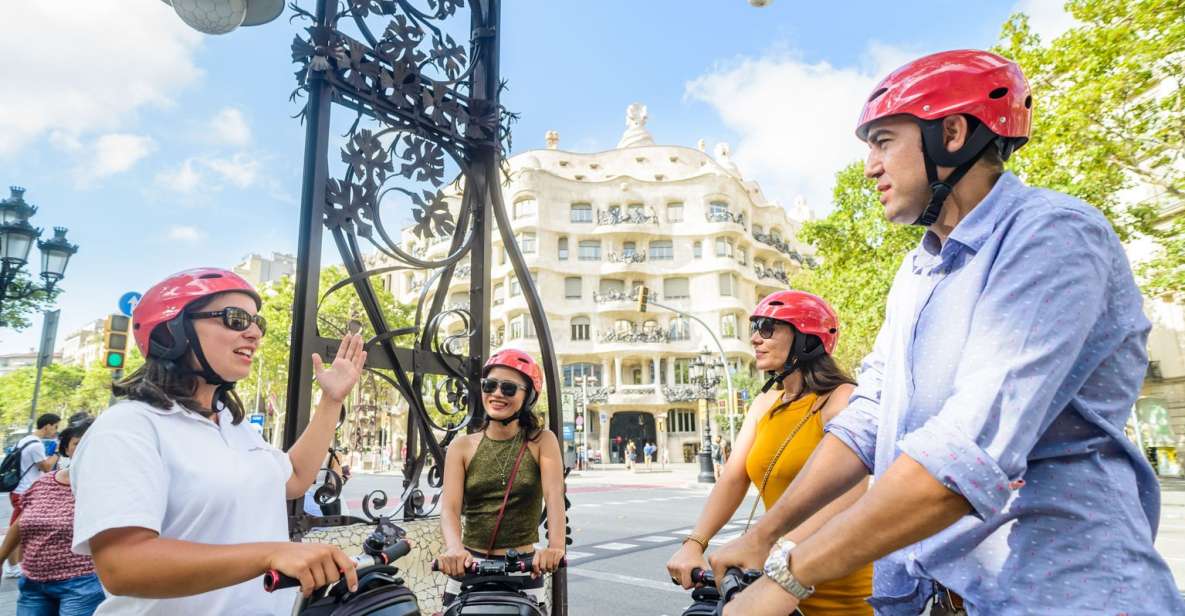
Not far from Casa Batlló is Casa Milà, built in 1906 and popularly called La Pedrera because of its construction style and rustic appearance.
This stop works because your guide frames it as an evolutionary step. You’re seeing one of Gaudí’s last major works along a street that already feels like an open-air architecture gallery.
You’ll have a guided photo stop with time for sightseeing. Since entry isn’t included, you’ll mostly experience it from outside. That’s still worthwhile here, because Gaudí’s exterior language—especially the irregular, sculpted feel—shows up best from the street.
One small planning thought: if you’re the kind of person who wants to go inside every major Gaudí site, you’ll need a separate ticket plan after the Segway tour.
Sagrada Família: The Most Famous Pause on the Route
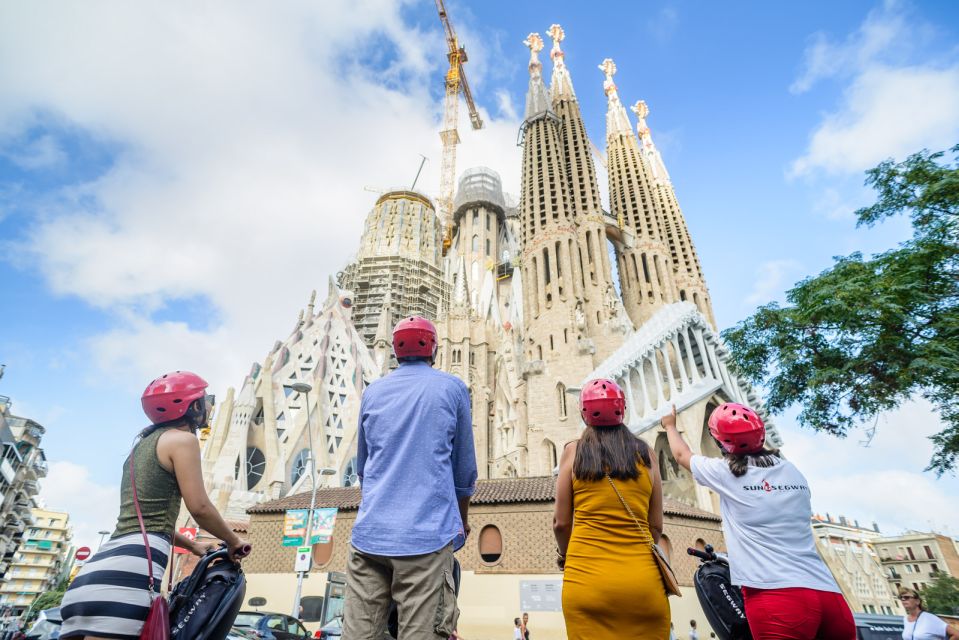
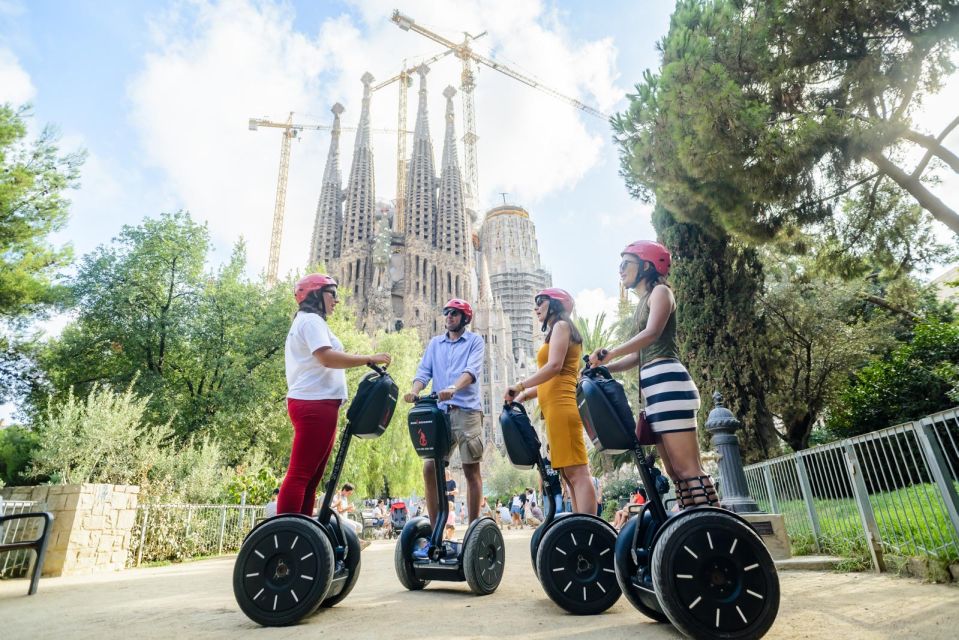
Then comes Sagrada Família, the monument that can’t be skipped if you care about Gaudí. The tour stops outside and gives you photo time and a guided explanation, but entry isn’t part of this experience.
It’s still a big moment. Construction began in 1882, and the guide points out that it’s still not finished. That ongoing status is part of why Sagrada Família feels less like a completed building and more like a living project tied to long-term belief and craft.
What I like here is the rhythm. You go from two residential-modernisme facades to a religious megastructure. You start to see how Gaudí’s methods scale up—from ornament and texture to a cathedral-level statement.
If you want to go inside, plan for it on another day (or right after, depending on opening hours). The Segway tour gives you the understanding; you decide later how much interior time you want.
La Monumental, the Born Area, and Local Barcelona Layers
After Sagrada Família, the tour continues toward areas that add texture to the story.
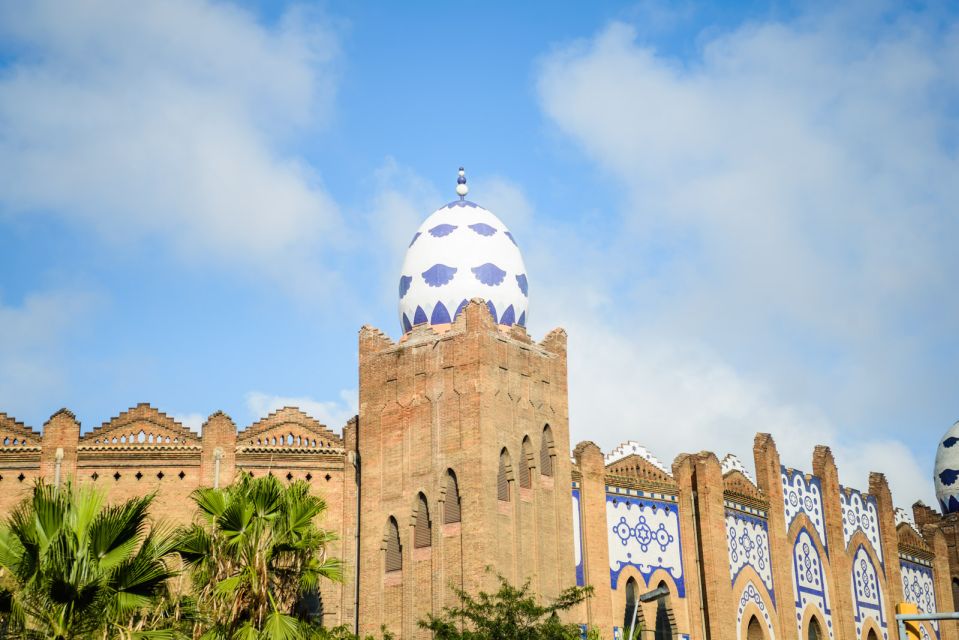
You’ll pass by La Monumental, an old bullring where bullfighting took place in the past. In Catalonia, bullfighting has been prohibited since 2012, which adds a modern-day context to a historic structure. Again, this is mostly a photo stop with guided context.
Next is El Born Centre Cultural and then a stop at the Basilica of Our Lady of Mercy. The route also references older city layers, and you’ll understand how parts of the Gothic Quarter and Born connect to Roman-era remnants and the broader medieval story of Barcelona.
If you’re trying to get a coherent mental map of the city, this part helps. The tour won’t turn into a deep dive into archaeology, but it does keep you anchored in place instead of jumping only between top-tourist icons.
Parc del Mirador del Poble-sec: A View That Helps You Catch Your Breath
To finish, you ride to Parc del Mirador del Poble-sec, another photo stop and viewpoint stop. A final viewpoint is a smart closer because it gives your brain a reset after dense architecture and busy streets.
This is where the day starts to feel like a loop: you’ve moved across districts, learned the architectural logic behind Gaudí’s style, and now you can step back and get a sense of how Barcelona fits together.
After the last stop, you return to the meeting point at Passatge de la Canadenca, 6, bringing the 2.5 hours full circle.
What’s Included in the $45 Price (and What Isn’t)
At $45 per person, you’re paying for more than “a ride.” The included items are:
- Segway rental
- helmet
- training session
- live guide
That’s the core value. You’re not left figuring out how the Segway works, and you’re not stuck with a self-guided route when your main interest is architecture.
What’s not included:
- entry to any attractions
- hotel pickup/drop-off
- food and drinks
For most people, that means the Segway part is the experience, while interiors are optional extras. If you plan to go inside multiple buildings, build extra time and ticket costs into your schedule.
Group Size, Pace, and Why It Affects Your Enjoyment
This tour runs with a max capacity of up to 30 participants, but larger groups are split into smaller groups of six individuals or fewer with a professional guide.
Why you should care: small groups mean less waiting and more attention. It’s also easier to follow instructions and keep the flow of motion without feeling like you’re just part of a moving crowd.
The pace is also built around short stops—many stops are about five minutes. That works if you want variety in a short window. If you prefer lingering, this might feel slightly fast and you’ll want to do “follow-up visits” later.
Languages and Your Guide Experience
The live guide can run in multiple languages: Spanish, English, French, Italian, Portuguese, Arabic. That matters in a language city—especially when architecture explanations can get more detailed than simple sightseeing narration.
The vibe from the guides is also part of the appeal. Names like Freddy and Danny show up as helpful, accommodating presences who make the Segway feel approachable, even if it’s your first time.
Who Should Book This (and Who Should Skip)
This is a good fit if you:
- want a 2.5-hour way to hit major Gaudí sites
- like architecture explanations while you’re moving through neighborhoods
- want photo stops plus context, without a full-day walking plan
- are comfortable with a light active ride after a training session
Skip or reconsider if you:
- are under 14 (under-14 joins on e-bikes)
- can’t meet the Segway requirements: 45–130 kg and at least 150 cm
- are pregnant (not allowed for safety reasons)
- have back problems (not suitable)
- need alcohol-drug use during tours (not allowed)
If you’re unsure, think of it like this: if you can comfortably handle a short training session and steady riding, you’ll likely enjoy the pace and the route design.
Should You Book This Barcelona 2.5h Gaudí Segway Tour?
I’d book it if you want maximum Gaudí and Modernisme value in a compact time window, and you’re happy to see the big attractions from the outside during this outing. The included Segway rental, training, helmet, and live guide make the $45 feel more like a guided activity than a bare tour.
You might choose a different format if you love slow museum-style time inside major sites like Sagrada Família or you know you won’t enjoy riding around for 2.5 hours even with training.
If you’re on the fence, here’s my practical decision rule: if your main priority is learning the architectural story while getting great photos efficiently, this is a strong match. If your main priority is long indoor time, pair your Gaudí Segway experience with a second day for tickets.
FAQ
What’s the duration of the Barcelona Gaudí Segway tour?
The tour lasts about 2.5 hours.
How much does the tour cost?
It costs $45 per person.
Where do I meet the guide and where does the tour end?
You meet your guide at Passatge de la Canadenca, 6 inside Jardins de Les Tres Xemeneies, and the tour ends back at the same meeting point.
Is the Segway and helmet included in the price?
Yes. Segway rental and a helmet are included, along with a training session and a live guide.
Are entry tickets to Sagrada Família, Casa Batlló, or Casa Milà included?
No. Entry to attractions is not included, so you’ll see the sites from outside during the stops.
What’s the minimum age to join?
The minimum age to participate in Segway tours is 14. If under 14, participants join on e-bikes.
What are the weight and height requirements?
You must weigh between 45 and 130 kg and be at least 150 cm tall.
What languages are available for the live guide?
The live guide can conduct the tour in Spanish, English, French, Italian, Portuguese, Arabic.
How big are the groups?
The tour can accommodate up to 30 participants, and large groups are split into smaller groups of six individuals or fewer with a professional guide.
Is it suitable for pregnant people or people with back problems?
No. Pregnant women cannot join for safety reasons, and the tour is not suitable for people with back problems.