A quick walk through Barcelona can feel like a secret map. This one focuses on El Born and the Gothic Quarter, with stories you will not pick up on your own. You get a clear route, a real local voice, and enough stops to make the time feel packed without feeling rushed.
I especially like the way this tour mixes big-name sights with smaller, easily missed corners. I also love the guide style: narrative street history plus practical suggestions that help you plan the rest of your trip.
One thing to consider: it is an information-heavy walk, so if you are traveling with small kids, you may find the pace a bit intense. Comfortable shoes help, because the tour involves about 2.5 hours of walking.
In This Review
- Key highlights before you go
- A Local Story Route Through El Born and the Gothic Quarter
- Meeting at Hotel Ohla and the Pace You Should Expect
- El Born: Medieval Streets, Mercat del Born, and What El Born Means
- A practical note on this section
- Palau de la Música Catalana: A Quick Architectural Moment (Tickets Not Included)
- Arc de Triomf: Modernism With Legends Attached
- From Hidden Lanes to Barcelona’s Main Post Office
- Barri Gòtic: 2000 Years of Stories in the Street Layout
- Sant Just, Sant Jaume, and Sant Felip Neri: Small Squares With Big Meaning
- Guide Style That Makes the Walk Work (Christian, Stefan, and the Storytelling Factor)
- Price and Value: What $55.51 Buys You in Barcelona
- Should You Book This Barcelona Hidden Streets Walk?
- FAQ
- How long is the tour?
- Where does the tour start and where does it end?
- Which neighborhoods will I visit?
- Is the tour offered in English?
- Is there a private tour option?
- What’s the maximum group size?
- Is admission included for all stops?
- Are food and drinks included?
- Can I use an electronic voucher or do I need paper?
- Is free cancellation available?
Key highlights before you go
- Small-group options plus a private tour option, with a maximum of 15 travelers
- El Born for about two hours, including the meaning of El Born and maze-like lanes
- Street-level Modernism moments like Arc de Triomf and a look at the Palace of Catalan Music area
- Barri Gòtic in founding layers, tied to Roman Barcelona and the squares you’ll pass
- Told by locals such as Christian or Stefan, praised for story delivery and useful extra tips
- Two huge neighborhoods, one efficient route, starting at Hotel Ohla Barcelona and ending in Plaça Sant Felip Neri
A Local Story Route Through El Born and the Gothic Quarter
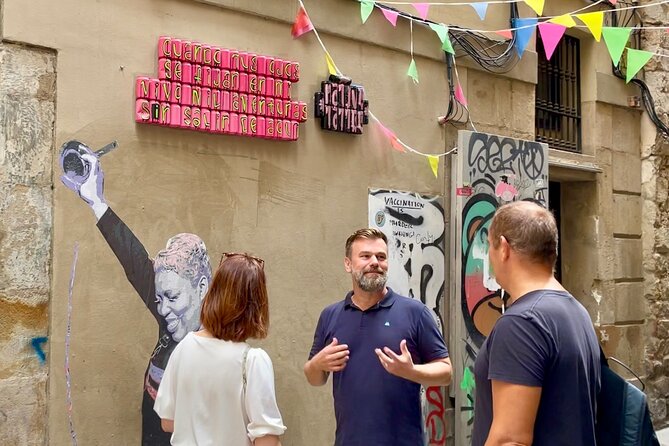
If you want Barcelona to click, you need more than photos. This tour is built around the idea that old streets are not just scenery—they explain how the city grew, changed, and kept rewriting itself.
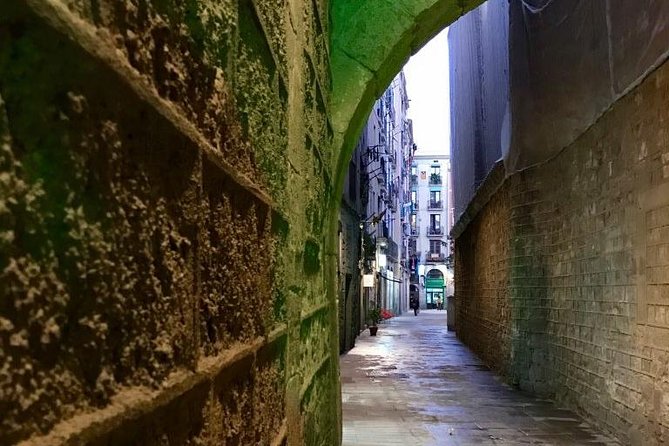
I like that it stays human-scale. You are not hopping between random attractions; you are walking the same kind of routes locals use: tight streets, sudden views, and those little squares that make you stop without realizing you’ve stopped.
The neighborhoods you cover, El Born and Barri Gòtic, both feel like living layers. One side leans medieval, with markets and packed lanes. The other side leans older still, with the sense that Roman Barcelona set the groundwork for everything that came later.
You can also read our reviews of more tours and experiences in Barcelona.
Meeting at Hotel Ohla and the Pace You Should Expect
This is a walking tour in the old center, and it’s designed around a practical tempo. Expect about 2.5 hours of walking overall, which is long enough that you’ll want sturdy shoes and a light plan (like keeping water handy on your own).
The tour runs in English and you can usually find multiple tour times, which matters in Barcelona where schedules can get tight fast. It is also booked fairly far ahead on average (about 60 days in advance), so if you have a specific day in mind, you should lock it in early.
Group size is capped at a maximum of 15 travelers. On top of that, you can choose a small group of just six or a private tour. That choice affects how interactive it feels. With fewer people, you tend to get better Q&A and less waiting at each stop.
El Born: Medieval Streets, Mercat del Born, and What El Born Means
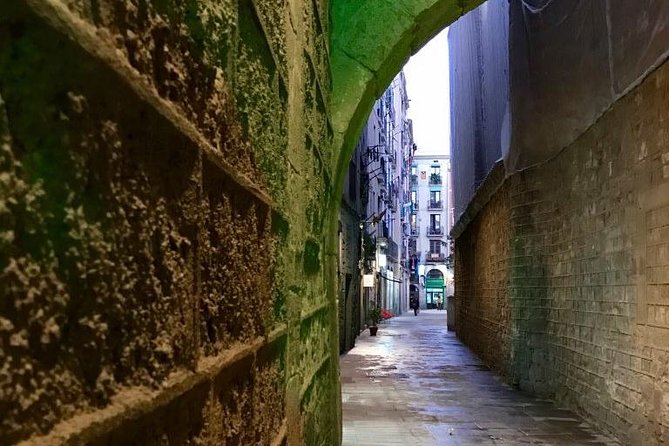
El Born is where the tour really finds its groove. You spend about two hours here, long enough to feel like you understand the neighborhood, not just pass through it.
You start by learning what El Born actually means. That small detail matters more than you’d think. Place names in Barcelona often reflect older realities—who lived where, what the area was known for, and how people described it long before today’s maps.
Then you get the street experience: a maze of narrow lanes and turns. This is the part that makes people feel like they discovered Barcelona on their own, even though you’re with a guide. The tour also passes by the Picasso Museum area while you move through the older streets, so it’s a good bridge between cultural landmarks and everyday old-town life.
A key stop is Mercat del Born, a major historic sight. Markets in older neighborhoods are more than shopping—they show how a community fed itself, traded, and organized daily life. Even if you only spend a few minutes at a market, you can see why the neighborhood grew where it did.
A practical note on this section
El Born is busy and narrow. You will likely spend a chunk of time walking, not lingering. If you’re the kind of person who loves to stop for slow photos, I suggest saving your longest photo breaks for the squares later in the route.
Palau de la Música Catalana: A Quick Architectural Moment (Tickets Not Included)
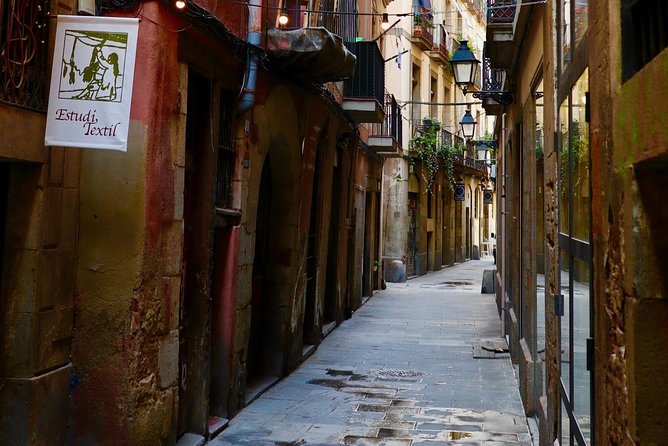
Early on, you’ll get a major sight: the Palace of Catalan Music area. The tour gives you about 15 minutes here, which is perfect for street-level orientation—what you’re seeing, why it matters, and what to notice if you’re curious enough to return later.
Important budget detail: admission here is not included. That doesn’t make the stop pointless—it still helps you understand what you’re looking at from the outside and sets you up to decide whether you want to schedule an interior visit separately.


Arc de Triomf: Modernism With Legends Attached
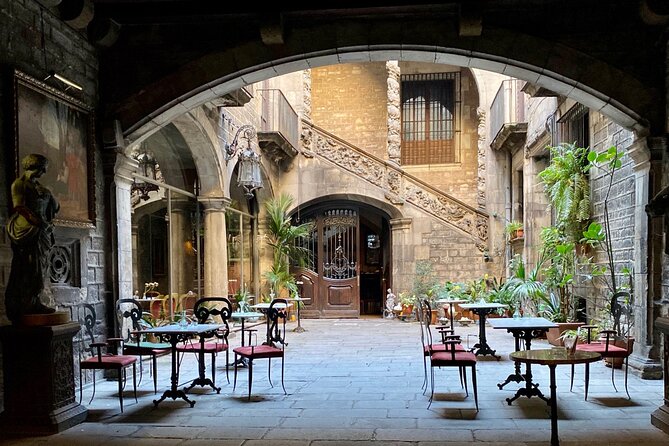
Next up is Arc de Triomf, also around 15 minutes. This is a classic “wow, I didn’t expect that” stop. The structure is tied to Modernism and comes with history and legends, so the guide isn’t just naming facts—they’re giving you reasons the monument keeps showing up in the city’s storytelling.
Why this stop works on this specific route: it’s a reminder that Barcelona is not only medieval. You’re seeing the city extend forward into a new style while still walking the older streets that frame it.
If you like architecture, this is one of the places where a short explanation actually changes how you look at the building—angles, materials, and symbolism start to matter.
From Hidden Lanes to Barcelona’s Main Post Office
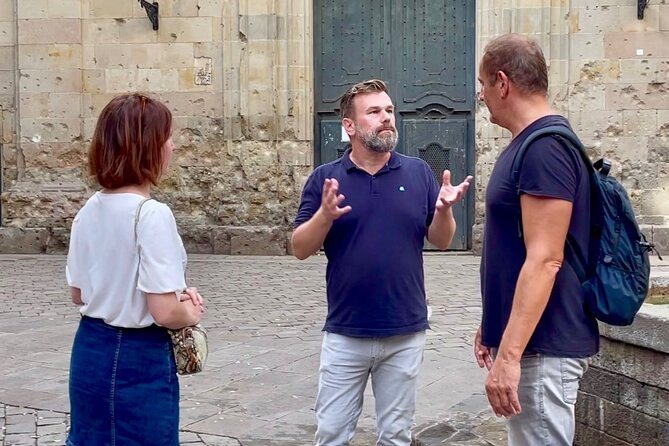
One of the best parts of this walk is the way it keeps you moving through little streets, where landmarks pop out when you’re already looking the right direction. The route includes the streets where you pass by the Picasso Museum area, but the point is not the museum itself. The point is learning how the neighborhood’s lines and turns guide your sense of place.
Then you come across the major post office building, described as a magnificent structure. Buildings like this are often treated as backdrops, but they are actually city infrastructure made monumental. In older capitals, these big civic buildings reflect power and planning—who got served first, what the city wanted to project, and how communication connected everything.
This stop is also a nice pacing change. After tight lanes and small squares, a bigger building makes you reset your eyes and your legs.
Barri Gòtic: 2000 Years of Stories in the Street Layout
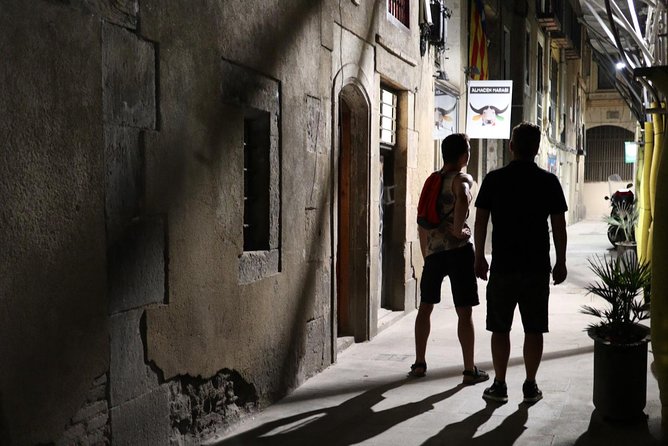
After El Born, you move into Barri Gòtic (the Gothic Quarter) for about 1 hour 20 minutes. This is the neighborhood where the city’s layers feel obvious. The tour frames it around a huge idea: Barcelona was founded more than 2000 years ago, and these streets help you understand where that story starts.
You’ll notice the difference in vibe right away. El Born feels like a medieval neighborhood with its own momentum. The Gothic Quarter feels like the city’s “core,” where history turns into layout—streets, walls, and squares that keep returning in different eras.
In practical terms, the guide helps you connect what you see. Without context, many Gothic Quarter sights can blur together. With the tour’s storytelling, the area becomes a sequence: why you’re walking where you’re walking, and what it meant when the stones were newer than your shoes.
Sant Just, Sant Jaume, and Sant Felip Neri: Small Squares With Big Meaning
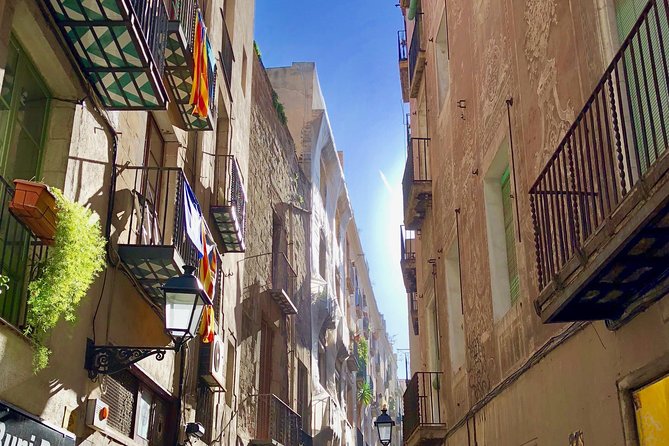
This tour ends with squares, and I love that choice. Squares slow you down just enough to absorb what you’ve already learned.
You pass Plaça de Sant Just, a square that dates back to Roman times. A Roman-date stop is more than a fun fact. It’s a reminder that what feels medieval today had older roots, and that the city’s timeline is not a straight line—it’s layers.
Then there’s Plaça de Sant Jaume, described as the heart of Roman Barcelona. The guide explains why Barcelona was founded in this general area. When you connect that to the street grid you just walked, it feels less like trivia and more like understanding the logic of the city.
Finally, you finish at Plaça Sant Felip Neri, a smaller square with a history-and-atmosphere vibe that works well as an endpoint. Ending in a lived-in pocket of the center helps you transition from tour mode to wandering mode without feeling like you were dropped into a shopping street.
Guide Style That Makes the Walk Work (Christian, Stefan, and the Storytelling Factor)
What consistently makes this tour stand out is the guide’s storytelling style. In the feedback, locals like Christian and Stefan come up again and again for sharing facts and legends you’d likely miss on your own.
I also like that the guide doesn’t keep everything inside the strict tour script. People note getting tips beyond the stops—useful suggestions that can help you shape what you do after the tour. If you’re the type who asks questions, this is the kind of tour where you’ll get better value, because the guide can connect dots between the scenes you’re seeing and what you might want next.
A small caution based on what’s been said: this is more adult-oriented. If your group includes kids who need hands-on activities or short attention spans, you might find the information density harder to manage.
Price and Value: What $55.51 Buys You in Barcelona
At about $55.51 per person for roughly 2.5 hours, the value here is mostly about guide expertise and time. In Barcelona, you can spend the same money on transportation plus tickets and still feel lost. This tour helps you feel oriented fast—because you’re paying for interpretation, not just sightseeing.
Here’s where your budget planning matters:
- The tour includes a professional guide.
- Most stops are free (including El Born and the main Gothic Quarter segments listed as free).
- The Palace of Catalan Music is not included for admission, so you may want to budget for that separately if you decide to go inside later.
- Food and drinks are not included, so plan a snack stop on your own if you’re prone to getting hungry mid-walk.
If you want the city to feel cohesive—medieval streets, Roman layers, and Modernism details—this is the kind of structured walk that earns its price.
Should You Book This Barcelona Hidden Streets Walk?
Book it if you want a smart first pass through two of the city’s most story-rich neighborhoods. It’s especially a good fit if you like walking, short explanations that change how you look at streets, and guides who tell legends in a way that makes the city feel personal.
Skip it or consider a different format if you’re traveling with very young children or if you prefer a light-touch tour with minimal historical context. Also, if you know you want to spend hours inside major buildings, you’ll still enjoy the street-level stops here, but you may want to pair this with separate ticketed visits later.
If you can handle about 2.5 hours on foot, this is one of the cleanest ways to turn Barcelona from a list of attractions into a sense of place.
FAQ
How long is the tour?
The tour lasts about 2 hours 30 minutes, including roughly 2.5 hours of walking.
Where does the tour start and where does it end?
It starts at Hotel Ohla Barcelona, Via Laietana 49, Ciutat Vella, and ends at Plaça de Sant Felip Neri in Ciutat Vella, near the heart of the Gothic Quarter.
Which neighborhoods will I visit?
You’ll walk through El Born and the Gothic Quarter (Barri Gòtic).
Is the tour offered in English?
Yes, the tour is offered in English.
Is there a private tour option?
Yes. You can choose between a private tour or a small group option of just six people.
What’s the maximum group size?
The experience has a maximum of 15 travelers.
Is admission included for all stops?
Not all stops have included admission. For example, the Palace of Catalan Music admission ticket is not included, while several other stops are listed as free.
Are food and drinks included?
No. Food and drinks are not included.
Can I use an electronic voucher or do I need paper?
You can present either a paper or an electronic voucher.
Is free cancellation available?
Yes. You can cancel for free up to 24 hours before the experience starts for a full refund.