REVIEW · BARCELONA
Barcelona: Sagrada Familia, Modernism and Gothic Quarter
Book on Viator →Operated by Artista Tours · Bookable on Viator
Gaudí, Romans, and medieval streets in one 3-hour loop. This tour gives you a guided route that connects Sagrada Familia to the Gothic Quarter without making you plan every step. You’ll also get a strong orientation for a first visit, plus included visits to several historic interiors.
Two things I like a lot: the stops are chosen to tell a story, not just to show buildings, and the group stays small (up to 20), so guides like Anastasia, Nuria, Christian, Kristina, Caio, and Leo have an easier time answering questions. One consideration: it’s not the kind of tour where you’ll automatically go inside Sagrada Familia, and the loud Old Town streets can make it harder to hear if you’re not close to the guide.
In This Review
- Key points before you go
- A Short Tour That Links Gaudí To Roman Barcelona
- What You Really Get At Sagrada Familia (And What You Don’t)
- Passeig de Gràcia And Modernism: The Story Behind The Streets
- Plaza de Catalunya Break: A Useful Reset In The Middle
- Gothic Quarter Time Travel: Casa de l’Ardiaca And The MUHBA Temple
- Casa de l’Ardiaca (Entry included)
- MUHBA Temple d’August (Entry included)
- General Archive Of The Crown of Aragon: Power Behind The Stones
- Ending At Plaça del Rei: Where To Stand For Your Next Move
- Price And Value: What $56.75 Buys You
- Logistics That Actually Matter (Meeting Point, Group Size, Timing)
- Should You Book This Modernism And Gothic Quarter Tour?
- FAQ
- Is entry to La Sagrada Familia included?
- How long is the tour?
- Where does the tour start and end?
- What sites are included with admission?
- What about tickets for the metro?
- Is there a mobile ticket?
- How big is the group?
- What kind of walking is involved?
- Are service animals allowed?
- Is cancellation free?
- Do I need to speak a specific language?
Key points before you go
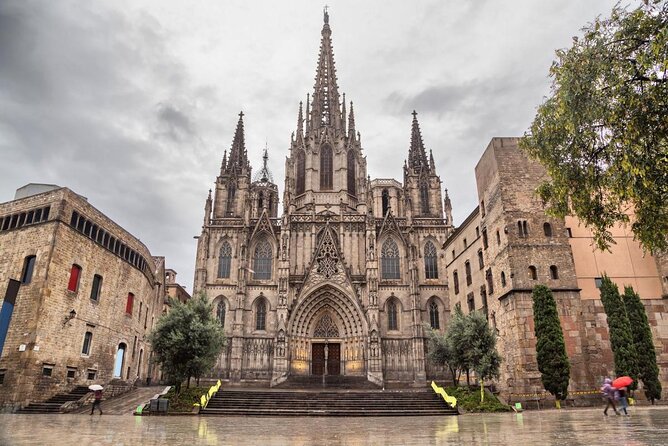
- Outside focus at Sagrada Familia: you’ll learn the meaning of details, but entry to the church is not included.
- Included admissions in the Gothic Quarter: Casa de l’Ardiaca, MUHBA Temple d’August, and the General Archive of the Crown of Aragon.
- A tight 3-hour itinerary: good for an overview day, not ideal if you want slow, long museum time.
- Small-group feel: max 20 travelers, with multilingual professional guiding.
- Practical transport plus walking: you’re near public transit, but you still need solid walking comfort.
A Short Tour That Links Gaudí To Roman Barcelona
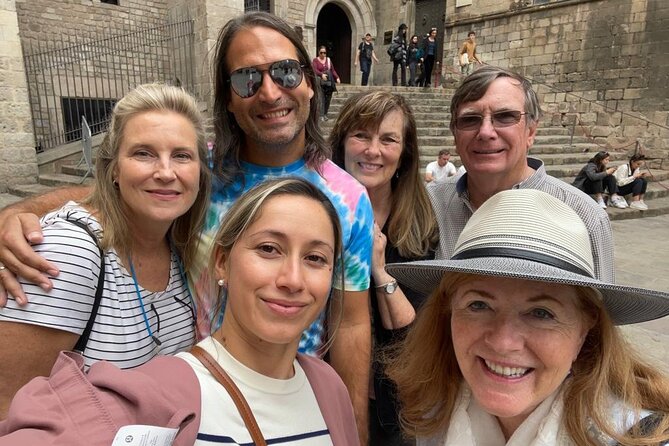
This is a smart half-day format if you want your Barcelona to make sense fast. In just about 3 hours, you get a guided “timeline walk” that jumps from Gaudí’s modernism to Barcelona’s Roman past and then into the medieval Gothic Quarter. It’s not trying to replace full cathedral or museum visits. It’s more like giving you the threads so you can pull the rest on your own.
I also like that the tour includes both major landmarks and the kind of quiet, lesser-known stops that make the Gothic Quarter feel lived-in rather than staged. And because the group is capped at 20, you’re less likely to get stuck standing behind a crowd while the guide talks.
One thing to keep in mind: you’ll be walking and stopping often, with short explanations at each point. If you’re hoping for long, quiet time inside buildings, you may find the pace a bit quick.
You can also read our reviews of more tours and experiences in Barcelona.


What You Really Get At Sagrada Familia (And What You Don’t)
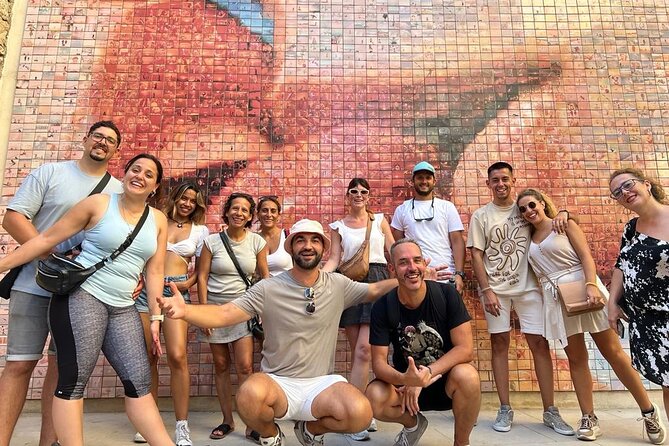
Let’s clear this up early, because it affects expectations. The tour has a 45-minute Sagrada Familia history segment that centers on Antoni Gaudí, and on the stories and meanings behind the Cathedral’s details. You’ll pass by and learn what to look for.
But entry to La Sagrada Familia is not included. So if your dream day is walking into the church itself during this exact tour, you’ll need to plan Sagrada entry separately.
Why this can still be a good deal: Sagrada is so detailed that seeing it cold can feel like staring at a wall of ideas without a key. A good guide helps you notice the symbolism and structure in a way that stays with you later when you do go inside. Guides on similar small-group tours often help you spot what’s significant—so you come away with more than photos.
A practical note from the overall experience vibe: there’s street noise in central Barcelona. One traveler mentioned the guide was hard to hear due to construction and traffic, and another mentioned there aren’t earphones. So if you want the best audio, position yourself closer to the guide at every stop.
Passeig de Gràcia And Modernism: The Story Behind The Streets
After the Sagrada segment, the tour moves toward the modernism heart of town. One stop focuses on the history behind a key museum area and then brings you into Barcelona’s best-known boulevard: Passeig de Gràcia. The time here is short (around 15 minutes), but the goal is orientation: you learn why this avenue matters and how it ties to the modernist era.
Then you get another 15-minute moment where the guide explains Gaudí’s vision and what makes the architecture feel like it’s thinking in 3D. This is the part that helps you understand modernism beyond pretty facades. You start seeing it as a mix of art, engineering, and personality.
There’s also a stop that focuses on chocolate, art, and history connected to one of the representative modernist architects of the time. Even if you don’t do a full food detour, these kinds of pauses are useful because they slow the tour just enough for the stories to stick.
Plaza de Catalunya Break: A Useful Reset In The Middle
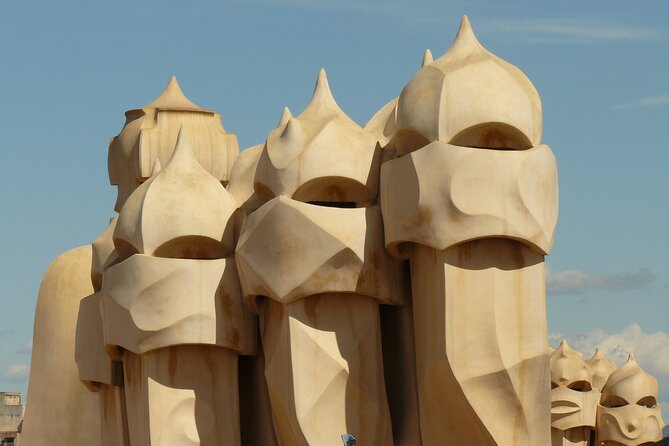
You get a break near Plaza de Catalunya, described as the biggest square in Barcelona. It’s short (about 10 minutes) and admission-free, but it serves a real purpose: it’s where you can reset your legs, take a quick look around, and re-check your bearings before heading deeper into the Old Town.
This matters because the Gothic Quarter is a maze. Even with a guide, it’s easy to lose your sense of direction when you’re surrounded by narrow streets and sudden turns. A quick breather helps you enjoy the next section more, not less.
Gothic Quarter Time Travel: Casa de l’Ardiaca And The MUHBA Temple
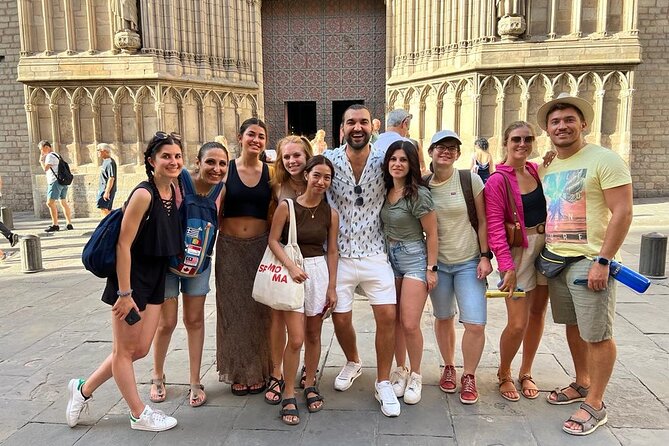
This is where the tour really earns its “Gothic Quarter” name. You’ll move into smaller spaces and start feeling the city’s layered past.



Casa de l’Ardiaca (Entry included)
You’ll actually enter Casa de l’Ardiaca, which is where the tour leans hardest into time travel vibes. The stop lasts about 10 minutes, and the admission is included.
Why this stop is worth it: the interior gives you a change of pace from street-level sightseeing. You’re not just looking at the Gothic Quarter as scenery—you’re stepping inside a historic space that helps you understand how these buildings worked and what mattered to the people living around them.
MUHBA Temple d’August (Entry included)
Next comes the Roman thread: MUHBA Temple d’August. Again, admission is included, and the stop is short (about 5 minutes), but it’s a big idea packed into a quick visit: you’re literally back to the Roman era.
The value here is contrast. One moment you’re dealing with medieval street texture and stone details; the next, you’re reminded that Barcelona’s “Old Town” has older roots than most people realize on a first trip.
General Archive Of The Crown of Aragon: Power Behind The Stones
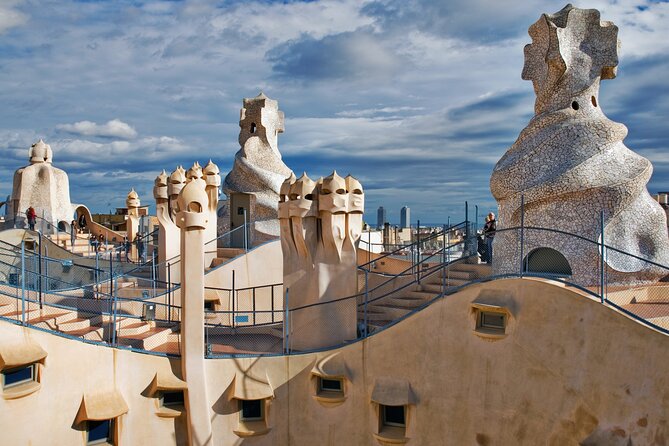
The tour finishes this historical arc with the General Archive of the Crown of Aragon. This is an important stop for anyone who likes politics, institutions, and how history happened through paperwork and power centers.
You’ll spend around 10 minutes here, and admission is included. The guide’s job is to relate the history of the Crown of Aragon in a surprising setting where major events in regional history took place.
This stop works well because it adds a layer that photos often miss. Buildings in Barcelona look dramatic, but they also housed systems—who ruled, how records were kept, and how the city shaped larger events. The archive stop helps you connect the dots between stone and authority.
Ending At Plaça del Rei: Where To Stand For Your Next Move

The tour ends at Plaça del Rei, with the meeting point note saying you finish right in front of the History Museum of Barcelona. This is a smart end location for a continuation day because you’re planted in the historic heart of the city.
Also, if you plan to keep exploring after the tour, finishing here reduces backtracking. You’re already in a walkable zone for more Old Town wandering.
Price And Value: What $56.75 Buys You
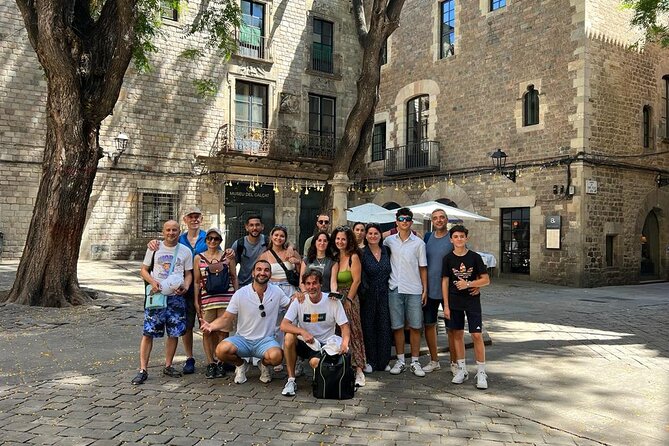
At $56.75 per person for roughly 3 hours, this isn’t trying to be a bargain tour. But it can be good value depending on what you want from Barcelona.
Here’s the practical way to judge it:
- You get a multilingual professional guide and a route that includes major sights like Sagrada Familia (outside/learning focus) and modernism landmarks.
- You get included entry at several historic sites: Casa de l’Ardiaca, MUHBA Temple d’August, and the General Archive of the Crown of Aragon.
- You’re paying for interpretation—having someone explain meanings and context so the city doesn’t become just a camera run.
Where the price might feel steep: if your main goal is specifically going inside Sagrada Familia during this tour. Since Sagrada entry is not included, you may feel like you’re paying for a preview rather than a full experience. For many first-timers, though, this format is perfect—do Sagrada later with the time you want, and use this tour to learn what you’re looking at.
Logistics That Actually Matter (Meeting Point, Group Size, Timing)
This runs about 3 hours and has a max group size of 20. That size is usually the difference between a personal, question-friendly walk and a frantic herd.
Your start point is Av. de Gaudí, 2 (L’Eixample), and the tour ends in Plaça del Rei (Ciutat Vella). It’s also stated to be near public transportation, so you’re not locked into taxis or a long pre-walk.
One “watch this” item: several guides and tour experiences depend on you being reachable right before departure. A traveler mentioned meeting info came by WhatsApp, so keep notifications on. If you miss the meet-up window, catching the group can take time.
Finally, this isn’t described as an all-day stroll. Expect walking, short stops, and minimal downtime. If you’re sensitive to noise (traffic and construction were mentioned), stand where you can hear the guide best.
Should You Book This Modernism And Gothic Quarter Tour?
If you’re a first-time visitor and you want Barcelona to feel like a connected story, I’d say yes. This is ideal when you want:
- a guided overview that links Gaudí, Roman Barcelona, and the medieval Gothic Quarter
- included entries to historic interiors (Casa de l’Ardiaca, Temple d’August, and the Crown of Aragon archive)
- a small group with guides who can answer questions (people praised Anastasia, Nuria, Christian, Kristina, Caio, and Leo)
I’d think twice if:
- your top priority is entering Sagrada Familia during this exact tour (entry is not included here)
- you hate fast pacing and want long time inside buildings
- you strongly prefer tours with audio equipment (there aren’t earphones mentioned, and street noise can be an issue)
If you do book, treat Sagrada as a guided “what to look for” moment, not the finish line. Then go inside later on your own schedule when you can take your time.
FAQ
Is entry to La Sagrada Familia included?
No. The tour focuses on the history and meaning of Sagrada Familia’s details, but entry to the church is not included.
How long is the tour?
The duration is about 3 hours.
Where does the tour start and end?
It starts at Av. de Gaudí, 2, L’Eixample, 08025 Barcelona and ends at Plaça del Rei, Ciutat Vella, 08002 Barcelona, right by the History Museum of Barcelona.
What sites are included with admission?
Admission is included for Casa de l’Ardiaca, MUHBA Temple d’August, and the General Archive of the Crown of Aragon.
What about tickets for the metro?
Metro tickets are not included.
Is there a mobile ticket?
Yes, the tour uses a mobile ticket.
How big is the group?
There is a maximum of 20 travelers.
What kind of walking is involved?
The tour notes a moderate physical fitness level, so it’s best if you can handle a walking route with multiple stops.
Are service animals allowed?
Yes, service animals are allowed.
Is cancellation free?
Yes. You can cancel for a full refund up to 24 hours in advance.
Do I need to speak a specific language?
The tour includes a multilingual professional guide.